


The Industry
Cement industry
The Challenge
Scaling AI beyond individual assets – building a data and AI backbone
Our Role
Strategic delivery partner, jointly with Microsoft
Your expert for questions

Michael Bruns
Partner, Data, AI & IIoT at PwC Germany
Tel.: +49 160 2600192
Email
The situation
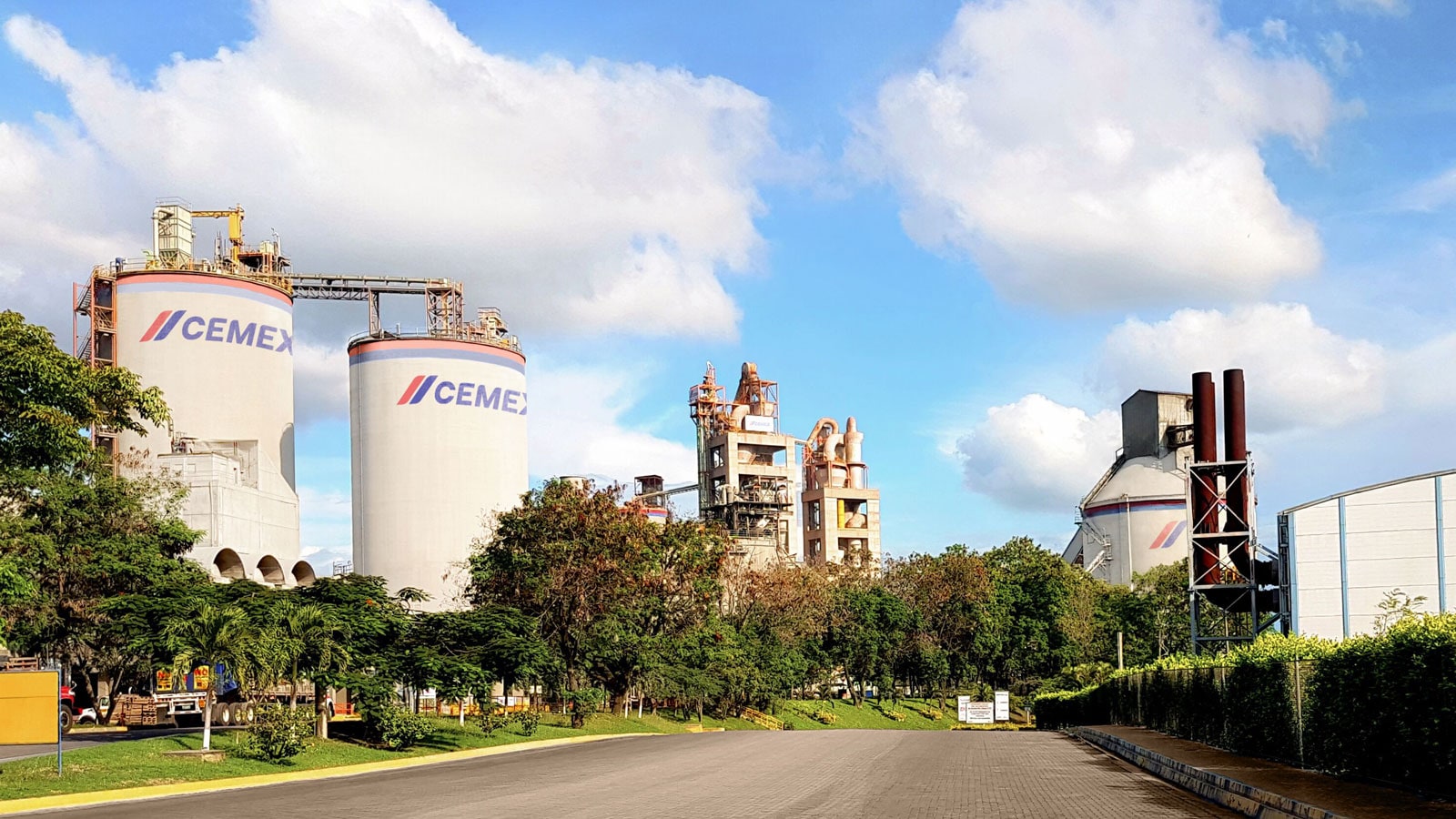
As one of the world’s largest cement manufacturers, Cemex faces a wide range of technological, organisational and environmental challenges. It also did not wait for AI to become mainstream in heavy industry before putting it to work: Cemex was already using AI models to steer its production processes and had demonstrated their value in individual plants.
The question facing the business was therefore never whether AI could improve cement manufacturing. It was how to make it work everywhere – reliably, repeatably, and at a cost per use case that made a network-wide rollout defensible.
That is where the ceiling sat. Every model was, in effect, its own project: built against the specific data landscape of a specific asset, integrated by hand, and difficult to move anywhere else. Processes are monitored via standard Process Information Management System and DCS/SCADA systems, which rely on proprietary industrial protocols and ageing interfaces. Bi-directional integration – the prerequisite for closed-loop AI that writes back into the process – proved highly unstable. Without a dependable write-back path, models could advise but not act, and each new use case meant starting the integration effort over again. Time-to-value stayed long, cost per model stayed high, and AI remained a set of islands rather than a capability.
The operational consequence was that day-to-day process control remained largely manual, resulting in yields below expected levels, higher energy consumption and delayed workflows. When product quality deviates from the specified tolerance limits, experienced cement specialists must manually adjust individual machine parameters – such as raw material feed rates – to restore optimal conditions. This approach inevitably leads to slower reaction times, loss of production throughput, higher downtime and varying product quality.
Through the “SmartOps” programme, delivered jointly with PwC and Microsoft, Cemex set out to break that ceiling: to increase production yield, reduce energy consumption and emissions, stabilise product quality and raise overall plant utilisation – and, underpinning all of it, to move from AI as a series of local initiatives to AI as an industrialised, scalable way of operating its cement plants.
Our approach
At the centre of the solution is a digital backbone: a common data and AI foundation deployed across the cement production facilities that turns model development and deployment from a bespoke engineering effort into a repeatable process.
Re-architecting connectivity was the precondition. Moving the integration layer to an OPC-UA and MQTT based technology stack gave Cemex stable, standardised, bi-directional access to process data -and with it, closed-loop control that operations could rely on. On that foundation, AI models continuously monitor process parameters, forecast future variations based on historical data, and automatically adjust machine settings to achieve optimised conditions.
Crucially, the backbone separates where models are built from where they run. Development, governance and lifecycle management are centralised, while execution happens locally at the edge in each plant. A model proven in one facility can be rolled out to the next without rebuilding its data integration from scratch, and a new use case can be developed, validated and put into production in a fraction of the time and cost a standalone deployment used to require.
Through the use of edge computing and comprehensive data security safeguards, this end-to-end solution ensures that critical assets remain protected and confidential data stays within secure environments.
“A key success factor was the close, partnership-based collaboration between Cemex, PwC and Microsoft within a cross-functional team. This enabled a fully coherent delivery-from the business case and operating model through to a secure IT/OT architecture.”
Kamil Lekston,Operations Processes & BPM Director at CemexCase Study Cemex
The value delivered
More efficient use of raw materials increases yield and reduces emissions
Since the AI solution went live at the priority plants, yield has increased by 6% – driven by more efficient raw material use in clinker production, alongside AI-optimised cement grinding. Energy savings amount to 4%: more precise process control has cut kiln fuel consumption in particular, with significant emissions reductions as a result. Plant utilisation is now above 90%, with shutdowns limited to exceptional cases such as complex planned maintenance.
“The solution we developed together demonstrates how AI can be deployed productively even in environments with stringent security standards, provided the right conditions are in place. The infrastructure that has been built gives Cemex a robust foundation for further AI use cases.”
Michael Bruns,Partner, Data, AI & IIoTSelected project-related challenges and solutions:

Outlook
SmartOps establishes a modern digital backbone that overcomes legacy IT/OT constraints and creates a scalable foundation for AI across Cemex plants. Standardised connectivity, better data accessibility and stable system integration support reliable deployment of AI use cases at scale – and make each additional use case faster and cheaper to deliver than the last. Beyond local optimisation, this also enables new operating models, including remote operations through regional control towers, where process monitoring, decision support and advanced analytics can be managed more consistently across multiple plants.
Contact our experts
How PwC advises on similar topics


Contact us