Building Trust Through Secure, Compliant AI

AI Governance for Responsible AI Adoption

Mann und Frau am Laptop

Your expert for questions

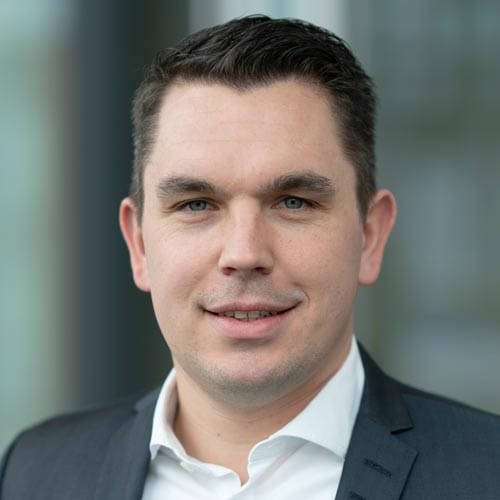
Moritz Anders

Moritz Anders
Partner at PwC Germany
Tel: +49 1515 5455621
Email

How to Manage Risk Across the Entire AI Lifecycle

Artificial intelligence (AI) is now embedded in how organisations are run. It supports forecasting, processes invoices and prepares tax data. But the critical question is this: can organisations stand behind their use of AI when something goes wrong? Manipulated models, data leaks or AI agents with excessive permissions can quickly turn a productivity initiative into a question of liability and security.

Organisations need to move AI applications from pilot to production quickly, without losing control along the way. AI governance provides a robust framework for doing so. It defines which decisions AI can make autonomously and when human intervention is required. It documents responsibilities and decisions, and provides transparency over operating and consumption costs. The result is a set of reusable standards that accelerate rollout, mitigate risk and make the value delivered by AI measurable.

PwC translates the requirements of the EU AI Act, GDPR and ISO/IEC 42001, along with tax, legal and sector-specific regulations, into practical action. We develop clear processes, produce auditable evidence and embed both within your existing structures. This makes 'Trust in AI' the foundation for scaling AI securely and creating lasting business value.


“Trust in AI isn't something you're granted upfront; it has to be earned. It grows as organisations clarify accountability, contain risk and make their use of AI transparent.”

Moritz Anders,Partner at PwC Germany

Our AI Governance Services for Day-to-Day Operations

We define who is responsible for what and establish clear, reliable rules for your use of AI.

We secure your AI environments from initial design through to live operation.

We automate compliance processes across all tax types and jurisdictions.

We show how well your AI applications perform, what risks they pose and where bias arises.

We provide independent assurance for your AI, from initial analysis through to the final audit report.

< Back

< Back
[+] Read More

How Effectively Are You Governing Your Use of AI?

Speak to our AI experts

Trust Built on Evidence: Our AI Audit and Regulatory Expertise

Many consultancies develop governance models, but few help organisations make trust in AI demonstrable. This is where PwC stands apart. As an audit, tax and advisory firm, we bring together business, technical and regulatory expertise. Rather than viewing AI in isolation, we assess its impact across the entire organisation, from data and accountability through to decisions and controls.

Drawing on our experience in audit, assurance, tax and regulation, we know exactly what evidence regulators, auditors, customers and investors expect. That's why we design AI governance to be traceable, well documented and auditable from the outset. This helps you reduce risk, accelerate approvals and lay the foundations for scaling AI securely.

“Trust in AI is built when organisations can explain how it works, when humans step in and who is accountable for AI-assisted decisions.”

Moritz Anders,Partner at PwC Germany

Frequently asked questions

AI governance encompasses all the rules, roles and processes that organisations use to manage their use of AI. This includes risk assessment, approvals, human oversight, monitoring and documentation. The aim is to bring AI applications into operation securely, compliantly and transparently.

Organisations need AI governance to contain risk, clarify accountability and manage their use of AI in a transparent, traceable way. It gives the board, business units, IT, legal and compliance a shared framework for approving, reviewing and further developing AI applications.

Trusted AI refers to AI applications that are transparent, robust and reliable, and that can be deployed responsibly. AI governance determines how an organisation structures, decides on and takes responsibility for its use of AI. In short, governance sets the framework, while Trusted AI describes the characteristics and assurance of a specific application.

Organisations meet these requirements by, for example, classifying applications by risk, clarifying roles, defining approval processes and documenting decisions. Rather than building a parallel system, they integrate GDPR, the EU AI Act and ISO/IEC 42001 into their existing processes, reviews and evidence.

Human-in-the-loop means that people intervene at defined points in AI-assisted workflows to review outputs or approve decisions. Organisations determine when human oversight is mandatory, for instance in the case of critical decisions, uncertainty or policy breaches. This ensures that accountability and decision-making authority remain within the organisation.

An independent audit is advisable when AI supports business-critical or regulated decisions, when external stakeholders expect evidence, or when self-declarations are not sufficient. It assesses governance, data, the model, the application and IT security, providing a reliable basis for approvals and reporting.

Follow us

Contact us

Moritz Anders

Moritz Anders

Partner, Cyber Security Leader, PwC Germany

Tel: +49 151 55455621

Nico Reichen

Nico Reichen

Partner, AI Portfolio Leader, PwC Germany

Tel: +49 171 8179 355

Hide