


An interview with Erik Hummitzsch, Deal Advisory Leader at PwC Germany. The PwC Deals expert explains why we are seeing a K‑shaped market, why companies should plan as if a market bubble was already forming, and why taking a wait‑and‑see approach is currently the greatest risk.
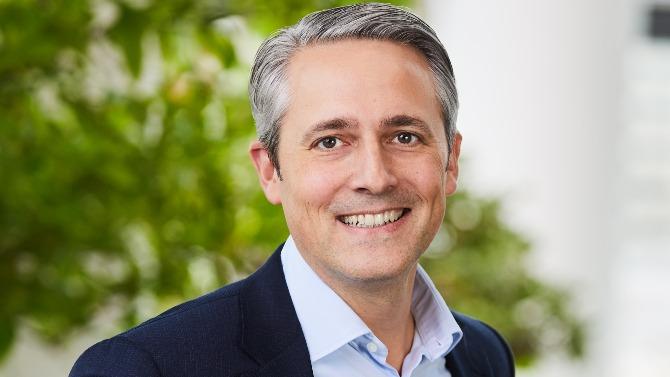
Erik Hummitzsch is a member of the Management Board, Head of Deal Advisory and Co‑Head of Consulting Solutions at PwC Germany. He began his career more than 25 years ago with PwC in London before moving to Germany. Since then, he has advised private equity and corporate clients on more than 350 deal projects.
The Global M&A Industry Insights 2026 suggest that last year’s trends have continued almost seamlessly. Would you agree?
Erik Hummitzsch: Yes and no. Like the year before, 2025 saw a clear increase in megadeals, transactions valued at more than USD 5 billion. They were the key driver behind the 36% increase in global deal value, even though the overall deal volume remained largely unchanged. However, there are important differences.
Which ones?
Hummitzsch: After a very weak 2023, the market recovered in 2024. In 2025, the divergence intensified considerably – we are now seeing what we call a K‑shaped market.
What does that mean?
Hummitzsch: In short, large, well‑capitalised buyers and technology‑driven companies are pulling ahead, while small and mid‑sized businesses remain cautious, or even very cautions.
Because AI remains a key priority and requires significant investment?
Hummitzsch: Exactly. Leading companies and investors are analysing very precisely how AI is reshaping industries, sectors and geographic priorities – in both the medium and long term. They understand how AI is redefining their competitive landscape and how strategic acquisitions can help secure advantages and strengthen their position.
Deploying capital strategically has become more critical than ever – increasingly into capital‑intensive AI infrastructure such as data centres, chips and related assets.
We see a structural shift: tech giants are using M&A to secure power and energy capacity for data centres – Deals that were rare five years ago. In the near term, however, AI may temper deal activity.
Why is that?
Hummitzsch: These substantial investments tie up capital which is not available for M&A. But in the medium term, I expect a strong investment wave that will actively drive deals.
How is technology transforming the way Deals are done?
Hummitzsch: AI accelerates deal process and timelines, improves due diligence precision and increasingly reshapes post‑merger integration.
Investment decisions are thus becoming far more data‑driven than they were just a few years ago.
Does that also make them better?
Hummitzsch: Yes, if the technology is applied with care. AI is redefining the entire deal lifecycle and helping identify and activate key value levers. Buyers should also assess how AI will transform potential targets over the next three to five years and how prepared those companies are to respond.
How should dealmakers, private equity investors and other players prepare for the possibility that the AI boom may not last? Could a more cautious approach be better? Is waiting and seeing perhaps the better strategy?
Hummitzsch: No, definitely not. The risk of missing opportunities or delaying critical strategic moves is simply too high. Instead, companies should plan as though the market bubble was already taking shape. This requires precise, differentiated scenario planning, including for the worst-case scenario. That means securing liquidity, flexible financing options and well‑defined MAC clauses that also address potential regulatory interventions.
Do you have questions?
Around 40% of global CEOs plan to make a major acquisition within the next three years. In the Middle East it’s 80%, while in Germany it’s only about 20%. How do you explain this discrepancy?
Hummitzsch: A major factor is the economic transformation underway in countries like Saudi Arabia and the UAE – shifting away from oil and towards industries such as technology, renewable energy and pharmaceuticals. Many transactions are backed by sovereign wealth funds with immense capital. In Germany, bureaucracy is perceived as a burden. Energy supply uncertainty also weighs on companies, and many mid‑sized firms are focused on restructuring rather than expansion. In effect, two models are emerging:
In the Middle East, players are actively shaping the future. In Germany, the focus is more on managing the present – at the risk of missing out on global momentum.
German companies are also lagging behind in AI adoption…
Hummitzsch: Yes, significantly. PwC’s Global CEO Survey 2026 shows that most German companies have not achieved higher revenues or reduced costs from AI in the past twelve months. Only 11% reported higher revenues, and just 16% reported lower costs – compared to 29% and 26% globally. But there are also positive trends.
What kind of trends?
Hummitzsch: Germany remains an attractive destination for foreign investors. The latest Private Equity Trend Report shows strong activity, particularly from European investors, especially in industrial manufacturing – even slightly ahead of the tech sector. Geopolitical dynamics also play a role. Notably, more than 40% of CEOs of the industrial companies in Europe and North America plan to expand into aerospace and defense sectors.
Speaking of geopolitics – how are global dynamics shaping the M&A market?
Hummitzsch: They don’t prevent M&A transactions, but they do divide the market into regions that are perceived as more or less secure. This helps explain why U.S. investors account for 60% of global deal value.
In some parts of Europe and Asia, heightened risk lowers deal activity.
Are you seeing any additional effects?
Hummitzsch: Deals are also used to strengthen supply chains and secure access to critical resources. Geopolitical uncertainty is contributing to the rise in megadeals – large, well‑capitalised players assume that scale provides the best protection against shocks. And we are seeing a shift towards friend‑shoring – a concentration of deals in markets with shared political values.


Contact us

Member of the Management Board, Deal Advisory Leader and Co-Leader Consulting Solutions, PwC Germany
