


M&A: 2025 summary
M&A in the Industrials & Services (I&S) sector in Germany saw a rebound in 2025, driven by ongoing declines in inflation, the gradual easing of monetary policy by central banks, and increased M&A with strategic goals, such as gaining new technologies and expanding capabilities. The number of transactions increased by 9% compared to 2024, although this is still below the 2021–2023 level: geopolitical conflicts and uncertainty continue to weigh on the market, causing dealmakers to exercise caution in their investments. As a result, most deals were small or medium-sized.
The Industrial Manufacturing sub-sector saw the largest number of deals in 2025, followed by Business Services. Together, these two sub-sectors accounted for two thirds of all deals in Industrials & Services. Deals in the Aerospace & Defence sub-sector grew by 50% compared to 2024, the largest increase of any sub-sector, while the Automotive sub-sector saw the largest decline, at 41%. Corporate buyers dominated, accounting for 56% of the deals. Germany was the most common country of origin for both corporate buyers (48%) and financial investors (44%).

“M&A in Germany’s Industrials & Services sector rebounded in 2025, driven by easing inflation, gradual relaxation of monetary policy, and a surge in strategic transactions focused on adopting technology and expanding capabilities.”
Tobias Blaser,German Industrial Manufacturing Deals Leader, Partner, PwC GermanySub-sector trends





Aerospace and Defence
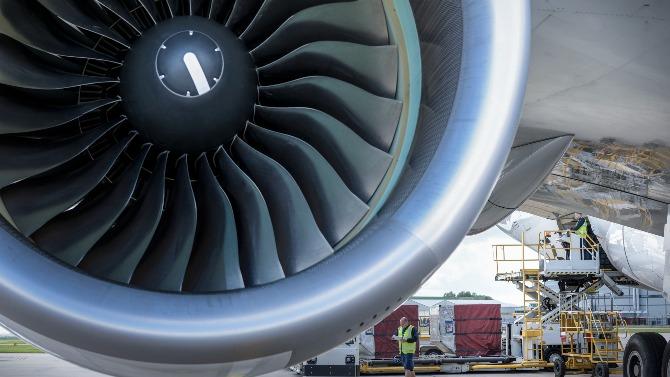
In 2025, we saw a 50% increase in the number of deals in the German Aerospace & Defence (A&D) sub-sector compared to 2024 – an unprecedented level of M&A. Dealmaking was dominated by corporate buyers (67%), mainly from Germany (88%). Arms and vehicles was the most common field for deals, followed by aircraft and aircraft parts, and electronic equipment.
Ongoing geopolitical conflicts are continuing to drive increased defence spending, which in turn is fuelling M&A across the defence sector. Defence companies are looking for assets that enhance their capabilities and product portfolios, expand their production capacity, or both, as illustrated by Rheinmetall’s strategic acquisitions of Leichtwerk AG’s facilities and employees, or of Naval Vessels Lürssen. These deals have moved Rheinmetall towards becoming a full system provider. We are also seeing ongoing consolidation and interconnection in the European defence industry: the memorandum of understanding between Airbus, Leonardo and Thales to create a pan-European space player is a prime example.
Innovation-led transactions are also gaining more momentum as new technologies are disrupting the sector and opening up opportunities for venture capital: this is exemplified by the investments in Quantum-Systems and Wingcopter. The growing momentum in the defence sector is also attracting interest from private equity, and we anticipate that deals involving private equity will materialise over the coming years, focussed on mid-market assets and companies with dual-use products.
The aerospace sub-sector is similarly being reshaped by its growing relevance to the defence industry, as reflected in Rohde & Schwarz’s investment in Orbint GmbH, which will see the two companies combine their expertise in satellite-based intelligence. Another example was OHB SE acquiring the remaining 30% stake in MT Aerospace AG that it did not previously own, which is intended to strengthen OHB’s position within the European aerospace industry and in the growing defence market.
Aerospace M&A is also being driven by efforts to bolster supply chain resilience. This is exemplified by The Exploration Company’s acquisition of Thrustworks Additive Manufacturing GmbH, an end-to-end specialist in advanced additive manufacturing technologies for aerospace components. The transaction highlights how companies are using acquisitions to secure critical capabilities, make supply chains less dependent on external players, and expand their technological footprint across the broader A&D sub-sector and adjacent industries.
Looking ahead, we expect M&A to drive growth in vital A&D segments, particularly defence, due to the need to increase European sovereignty, build up capabilities and create a stronger industrial base for defence. We expect non-defence companies to take a closer look at the sector, trying to leverage their expertise and idle capacity to diversify and seize new growth opportunities. Overall, both aerospace and defence are poised to benefit from increased public and private investment, driven by lower interest rates and heightened geopolitical tensions. We anticipate that this will fuel further M&A in 2026.
Automotive
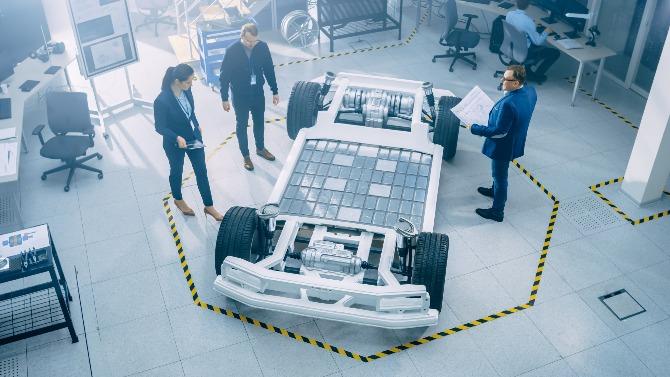
Automotive M&A declined by 41% in 2025 compared to 2024, reflecting the difficult environment in which the German Automotive sub-sector is currently operating. The macroeconomic environment, competition from Chinese OEMs – both within China and abroad – and slower-than-anticipated adoption of electric vehicles are all weighing heavily on the sector. Consequently, we saw numerous deals by turnaround-focussed investors, such as Mutares’s acquisition of NBHX Trim Europe and Magirus, and Axent’s acquisition of Eissmann. Given the current backdrop, we expect this trend to continue in 2026, with distressed or attractively priced assets being readily transacted, while larger, strategic deals will continue to draw more scrutiny.
One area of focus for German automotive companies continues to be connected, automated, shared and electric (CASE) assets. Autonomous driving assets drew particular interest in 2025, such as ZF’s advanced driver assistance systems unit being acquired by Samsung Electronics. Further examples include Volkswagen’s investment in Forge Nano, a manufacturer of nanomaterial coatings for lithium-ion batteries and catalyst applications, or Qualcomm’s investment in Qorix, a provider of middleware solutions. We expect to see further deals in this space, including private placements, investments or joint ventures to maintain flexibility and share development costs.
To finance this transformation and optimise capital allocation, many German automotive companies are divesting assets they deem non-core. Examples in 2025 included Audi selling its majority stake in Italdesign, Continental’s spin-off of its Automotive group sector and the planned sale of its ContiTech group, and Lyft’s acquisition of the Mercedes-BMW joint venture FREENOW. As the need for capital will remain high, we expect that company executives will continue to divest non-core assets and take further steps to optimise their portfolios in 2026.
Excess European production capacity remains an issue, especially in higher-cost countries. Non-European OEMs looking to expand their European production footprints might try to acquire these facilities. Other potential acquirers may include defence companies seeking additional production capacity and personnel to meet increasing demand. However, we do not expect to see automotive companies making a large-scale shift into the defence space: among other hurdles, automotive production is centred mostly around mass production capabilities as opposed to defence volumes.
Looking ahead to 2026, we expect that the German Automotive sub-sector will continue to face headwinds, which will also weigh on dealmaking – although we do anticipate some bright spots, as highlighted above. We are also seeing automotive companies reshape their organisational structures by creating standalone businesses under an overall holding entity. This will allow easier divestment of these businesses if necessary, make it easier to raise capital for specific ventures, and create more flexibility to enter into joint ventures and partnerships, sharing R&D costs and driving innovation. We anticipate that corporate buyers will remain the largest investor group, as was the case in 2025 (69%) and in previous years.
Business Services
Business Services is a capital-light sub-sector, and this made it an attractive target for M&A in 2025 – by number of deals, it was the second-most attractive of all I&S sub-sectors. Dealmaking in the German Business Services space remained broadly stable, with a 1% increase in the number of transactions compared to 2024. Corporate buyers dominated dealmaking, accounting for 54% of transactions, with around half of all buyers (51%) being from Germany.
Professional services firms remain a key focus for investors and represented by far the most active segment within the Business Services sub-sector. Their attractive, asset-light business models and the highly fragmented nature of the market continue to support buy-and-build strategies, particularly for financial sponsors.
Management consulting and other advisory firms also attracted investor interest in 2025. Notable transactions included the merger of Ducker Carlisle and Munich Strategy, and Accenture’s acquisition of Staufen. Distribution and logistics consulting businesses were also involved in a significant number of deals, which was likely due to geopolitical uncertainties driving companies to reassess their production and supply chain footprints. This trend is exemplified by Investcorp’s acquisition of a majority stake in Miebach Logistik, and GWC’s acquisition of a 16.15% stake in ANCLA Logistik.
There is also still an appetite among investors for targets in accounting and tax advisory services, as can be seen in Cinven’s acquisition of a majority stake in Grant Thornton and Rödl & Partner’s acquisition of WMS Steuerkanzlei.
The rapid adoption of AI is transforming the world of work. Accordingly, talent development and education services companies have seen an increase in interest from investors, and we therefore expect a steady flow of deals to continue. Examples from 2025 included Amadeus Fire’s acquisition of eduBITES to add AI agent-powered services to its range of digital B2B training, and its acquisition of Masterplan, an AI-powered e-learning platform.
As regulations grow and sustainability initiatives become more widespread, companies operating in this segment are expected to remain attractive targets for acquisition. A prime example was Nehlsen acquiring Karl Meyer, a waste treatment and disposal company. There is also ongoing interest in the fragmented field of testing, inspection, certification and compliance (TICC). Investors are pursuing a buy-and-build strategy to expand their capabilities and regional presence in this area, such as Normec acquiring Labor Friedle and GALAB Laboratories.
We expect Business Services assets to remain attractive targets for both strategic and financial investors in 2026. However, it will be worth keeping an eye on whether any more investors actually succeed in entering the German tax consulting market, as this trend is facing increasing resistance from the authorities: the Federal Ministry of Finance has announced that it intends to close loopholes around ownership structures of this nature.
Engineering and Construction
2025 was a positive year for dealmaking in the German Engineering & Construction (E&C) sub-sector, with the number of deals increasing by approximately 23% compared to 2024. As in previous years, most buyers (64%) were corporates, a pattern we expect to see in 2026 as well. Buyers from the German-speaking countries dominated (61%), 81% of them coming from Germany.
M&A in the German E&C sub-sector is being driven primarily by the construction market, alongside continued momentum in civil engineering. Within construction, acquisitions largely focused on plumbing, heating and air-conditioning contractors. Notable transactions in 2025 included bluu unit’s add-on acquisitions of Koschke GmbH, ACI Gruppe and Heuberger Kälte Klima GmbH, which reflect ongoing consolidation in the sub-sector. Meanwhile, dealmaking in civil engineering was dominated by engineering services companies, owing to their capital-light business models. Examples included Encoviva’s complementary acquisitions of IAS Planungs GmbH and ING.FTG mbH, both active in building systems.
The largest transaction within the E&C sub-sector in 2025 was Holcim’s €1.85 billion acquisition of Xella. This move is in line with efforts to improve the energy efficiency of older buildings, highlighting the sector’s continuing focus on sustainability-driven investment in E&C. Further sustainability-related activity included Sustainable Development Capital’s acquisition of a minority stake in Empact GmbH, an energy services provider dedicated to providing integrated renewable energy solutions to decarbonise buildings.
The German Government’s €500 billion infrastructure fund is expected to significantly stimulate demand, driving increased dealmaking in the sub-sector over the coming years. This trend is already evident in several completed transactions, with companies making strategic investments to expand their capabilities and broaden their portfolios in a rapidly growing market. Examples included Strabag’s acquisitions of Gebr. Stumpp GmbH & Co. KG and Sandkamp Tiefbau GmbH, a pipeline construction specialist serving public utilities and waste disposal companies. Similarly, Gräper acquired Innecken Elektrotechnik GmbH to expand its services in the energy infrastructure segment, positioning the group as a full-service provider across the entire energy project value chain.
Overall, 2025 saw heightened interest from investors – particularly from financial sponsors – in companies focusing on the construction of water and sewer lines. This was evident in NRW.Bank acquiring Fluvius GmbH, Oakley Capital acquiring Infravadis GmbH and Hannover Finanz acquiring Rohrsanierung Jensen GmbH & Co. KG.
Investor interest in companies that provide services and products for data centre infrastructure is also rising, given the growing importance of data centres for the economy and society. Illustrative deals in 2025 included Deutz’s acquisition of Frekr Aggregatebau GmbH, a provider of emergency power systems for data centres, and Arcadis’s acquisition of KUA DC, a data centre architect. We expect to see further deals in this space in the coming years, driven by the ever-growing need for data centre capacity.
Industrial Manufacturing
The German Industrial Manufacturing sub-sector saw the largest number of deals of any I&S sub-sector in 2025, with dealmaking increasing by 21% compared to 2024. Unlike all other I&S sub-sectors, financial investors were the dominant buyers, accounting for 52% of the transactions; 45% of these investors were based in Germany.
Acquisitions in the industrial machinery industry were a key driver of M&A, with transactions often focusing on automation solutions across various industries. Notable deals included Agile Robots’ acquisition of thyssenkrupp Automation Engineering to expand its portfolio of smart automation solutions, Voilàp’s acquisition of Stuertz GmbH, a manufacturer of automated machines for PVC processing, and MAFU’s acquisition of a majority stake in Sherpa Robotics GmbH to strengthen its capabilities in CNC automation. This trend is expected to continue, as companies in various sectors are looking to increase automation in their manufacturing facilities, driven partly by a lack of skilled workers.
As outlined in our mid-year update, we saw the return of large deals in the Industrial Manufacturing sub-sector. This was exemplified by Samsung Electronics’ €1.5 billion acquisition of FläktGroup, Rieter’s strategic purchase of Barmag, and Stonepeak’s purchase of a 50% stake in IFCO Systems GmbH, a leading provider of reusable packaging solutions for fresh food.
Electronic and electrical equipment was the second-most active industry within Industrial Manufacturing and saw a steadier flow of deals than in 2024, reflecting a broader trend of stability in the industrial landscape. A notable transaction in this space was Techem’s acquisition of Inexogy Smart Metering GmbH & Co. KG, one of Germany’s leading independent metering point operators. This deal underscores strong interest in smart metering companies from both corporate buyers and financial investors, a trend further exemplified by Rivean Capital’s majority investment in Engelmann Sensor GmbH, a developer and manufacturer of smart submetering technology.
Overall, private equity was more heavily involved in electronic and electrical equipment than in any other area within Industrial Manufacturing, accounting for 61% of deals. A prominent example was One Equity Partners’ acquisition of BARTEC, a provider of explosion protection technology and other safety equipment for hazardous environments.
We are also continuing to see strong interest in storage battery manufacturing, driven by the critical role of batteries in advancing the energy transition in Germany and across Europe. Transactions in this space included Lyten’s acquisition of assets from Northvolt Germany (Northvolt Drei), Aviva Investors’ investment of up to €150 million in Terra One Climate Solutions GmbH, and Blue Elephant Energy’s acquisition of a majority stake in Solar215 GmbH.
Like in the Engineering & Construction sub-sector, there is growing investor interest in companies that offer products and services for data centre infrastructure, particularly in companies providing ventilation, air-conditioning, refrigeration, filter and cleanroom technology. Recent transactions included bluu unit’s acquisition of KKL Holding GmbH, Caverion’s acquisition of Schulz Lufttechnik GmbH and Rensa Flitration’s acquisition of IREMA-Filter GmbH. This trend is expected to remain strong in 2026.
“M&A in I&S is gaining momentum, driven by advancements in AI, the need for automation solutions, growing sustainability requirements and increasing infrastructure development across the sector. With increased defence spending and significant investor interest, dealmaking is poised to accelerate, although geopolitical and trade uncertainties could still pose challenges.”
Sven Heinemann,EMEA Value Creation Driver for Industrials & Services, Partner, PwC GermanyM&A in Industrials & Services: 2026 outlook
M&A in the I&S sector rebounded in 2025, and this momentum is expected to continue into 2026. Key drivers such as AI, automation, sustainability, infrastructure development and sector-wide transformation will remain central to dealmaking. Corporates will continue to pursue acquisitions to gain critical technologies and capabilities aligned with their business models, while also divesting non-core assets. Meanwhile, financial investors are expected to remain very active, with significant quantities of dry powder ready to be deployed.
The increase in the German defence budget and the EU’s new SAFE defence financing mechanism are expected to further boost dealmaking within the sub-sector in 2026 and beyond. We also expect to see non-defence companies assessing the sector, trying to leverage their expertise and idle capacity to diversify and seize new growth opportunities. However, uncertainties remain, including ongoing geopolitical tensions and unpredictable global tariffs: escalation in these areas could have a significant impact on dealmaking.



Contact us