

Holistic strategies for navigating US tariffs. What impact will America’s tariffs and trade policies have on German companies? Our interdisciplinary team is here to help you make the right strategic choices for your business in light of today’s geopolitical tensions.

PwC’s Trade Office: US tariffs and their impacts on German companies

Verschwommene Silhouetten von Menschen im Gegenlicht

A watershed moment for global trade

The US has stepped up its trade war in recent weeks and announced new tariffs on strategic products – all of which will have a direct impact on transatlantic trade. Blanket tariffs on all imports to the US will have repercussions for exporters all around the world, including in Germany: the German economy is dependent on America as a market for nearly 10% of all its exports. Whether you’re an engineering firm, an automotive supplier or a chemical company, any business exporting to the US will have to deal with new obstacles to trade, ranging from increased costs to weaker supply chains. The pressure to act is rising. 

These complex issues are raising complex questions for companies around profitability, competitiveness and the financial impacts of tariffs:  

  • Which of our products will be affected by the new tariffs, and to what extent? 
  • Who will pay the tariffs and what are the tax implications? 
  • Are there exceptions we could make use of or other ways to minimise our exposure to the tariffs? 
  • How is your manufacturing footprint affected by trade barriers and tariffs?
  • Do you need to move operations or source from alternative markets? 
  • Is your supply chain able and flexible enough to cope and respond to trade barriers and shortages?
  • Do we need to rethink our market and export strategy for North America? 
  • Is it worth considering moving production to the US or neighbouring countries? 
  • How can we systematically integrate the risks posed by tariffs into our compliance and risk management strategy? 

What is clear is that the new tariffs will drastically raise the cost of imports and threaten the competitiveness of German products on the American market. German business leaders therefore need to take action now to proactively revise their strategies to fit the situation and remain competitive. Strategic realignment has become unavoidable.

“These tariffs will hit German companies on multiple levels, from tax issues and transfer pricing to the supply chain and corporate strategy as a whole. It’s vital for companies to thoroughly analyse the impacts and act quickly to identify opportunities and make well-founded decisions.”

Dr. Michael Tervooren,Partner, Head Customs & International Trade at PwC Germany

Our interdisciplinary team is here to help you holistically address tax, tariffs, strategy and operations, boosting your resilience and securing your competitive position.

How we can help you

We can analyse changes to tariff policy to determine their impacts on profits and efficiency. Our fact-based recommendations provide an excellent foundation for you to make strategic decisions.

We can provide comprehensive advice regarding customs, excise and foreign trade law issues.

We can help you make your company’s processes and supply chains more resilient – to stay competitive in the long term.

From strategy to execution – our approach to supporting your company with transformation and realignment.

We assess your supply chain and contracts and advice on measures to manage the impact of US tariffs.

We enhance the transparency and efficiency of your customs processes with digital track-and-trace solutions.

< Back

< Back
[+] Read More

Digital tools and products

SAP® Global Trade Services (GTS®)

Maintaining an overview of international customs requirements takes a lot of people – and time. That’s why we at PwC now offer a holistic solution for dealing with customs and other international trade issues. Our goal is to minimise your risk when it comes to imports and exports.

GTS is SAP’s cloud-based software solution for ensuring that your global trade data is always up to date – and for ensuring on-time compliance with customs regulations and technical requirements.

Find out more

Our approach: a tailored customs strategy in four steps

Initial discussion

Initial discussion This first stage allows us to gauge where you are now, so that we can provide support tailored to your needs in the following stages. Some of the questions we address at this stage include the following:

  • Will the new tariffs affect your company, and if so, to what extent
  • Which industry-specific challenges are you having to face?
  • What are your options for an initial plan?

Contact us for an initial discussion – with no commitment

Basic workshop

In the basic workshop stage, we take a more detailed look at how your company might be affected and examine potential scenarios.

We’ll work with you to analyse real-world import scenarios and identify relevant areas of action for your corporate strategy. One of the most important elements of this involves examining what data is available and how good its quality is – good-quality data is essential for reliable data-driven decision-making. Once we’ve done this, we plan out targeted changes to boost your resilience for the long term and get your company into the best possible position to tackle the current challenges.

Deep dive workshop I

This workshop comprises data-driven analysis of your existing processes, focusing on the following areas:

  • Data-driven analysis of your supply chains and trade partnerships: this provides in-depth insights into the structure and nature of your existing trade relationships and supply chains, identifying weak points and opportunities.
  • Evaluation of the results: following the analysis, we’ll discuss the results and combine them with the outputs from the basic workshop, ready to build solutions together with you.
  • Developing strategic approaches: based on all the data and insights collected so far, we’ll develop strategic approaches to boost your resilience.

Deep dive workshop II

This final workshop looks at how your corporate strategy interacts with your business processes. Building on the data-driven analyses of the previous stages, this workshop delivers innovative approaches to boost maturity in your tax and customs strategy, your operations and supply chain strategy, and your overarching corporate strategy.

We’ll work with you to identify the most important levers for your company – price strategy, market diversification, strategic partnerships, mergers and acquisitions, and much more.

Finally, we’ll identify the next steps towards each of your chosen projects, and work with you to make them a reality.

Strategic options for German companies operating in the US

On a macro level, there are three options for companies to navigate the uncertainty and complexity of current US tariff policy: protect, optimise or exit.

One option for dealing with current uncertainty and risk is to maintain your US operations and await further developments. This approach makes sense if the tariffs will only have a minor impact on your profits, and if significant changes to your operations would be difficult or expensive. Nevertheless, you still need to keep a close eye on the situation and be ready to respond to any new developments.

Optimisation is usually the most effective option to maintain or improve your company’s competitiveness. This approach requires thorough analysis of your current position in the market, before applying a variety of strategies to improve your processes and strengthen your market position. Optimisation can be an effective approach to deal with losses of profits or competitiveness, whether large or small – although a new business model may also be necessary in cases where profits are severely affected. This approach focuses on achieving the maximum possible impact with the minimum possible effort and investment.

If the costs or losses incurred by remaining in the US are simply too high, or excessive investment would be necessary, a strategic withdrawal from the US to focus on more lucrative markets may be your best option. This approach requires careful realignment of your corporate strategy and a targeted search for new opportunities so that your company can remain profitable.

Unsure about what to do next? Contact us and we’ll work with you to determine which option best suits the demands of your business and identify the most efficient way of achieving your strategic goals.

Contact PwC’s Trade Office

Email: de_trade_office@pwc.com

Your experts at PwC’s Trade Office

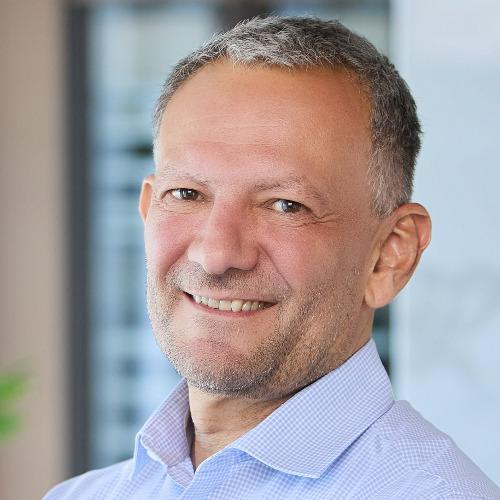
Dr Michael Tervooren

Partner, PwC Germany

Attorney-at-law Dr Michael Tervooren has worked for PricewaterhouseCoopers GmbH WPG since 2003 and leads the PwC Customs, Excise and Export Control team at 6 locations in Germany. He is also responsible for Customs IT/SAP GTS nationwide. He leads the Export Control team in Europe and is part of the EMEA Customs Core Team.

Karina Lück
Karina Lück

Director, Supply Chain Operations Transformation, PwC Germany

Karina Lück is a Director in Operations Transformation at PwC Germany with 14 years of experience in Supply Chain and Operations. She oversees the strategic and operational delivery of complex transformation programs, leading cross-functional teams and coordinating cross-location initiatives. She is part of PwC DE Leadership Team of Operations Transformation and part of the Trade Office.

Sounia Kombert
Sounia Kombert

Partner, Head of Indirect Taxes, PwC Germany

Sounia Kombert is an Indirect Tax partner in our Dusseldorf and Cologne office. She is a certified tax advisor and lawyer with more than 20 years of experience at PwC.

Samy Walleyo
Samy Walleyo

Partner, Deals Strategy and Operations Leader, Industries Leader, PwC Germany

Samy is head of Deal Strategy and Operations at PwC Germany and Clients & Markets Leader Advisory. He is focused on delivering the deal value through international and multi-disciplinary carve-out, integration and value creation projects.

Our newsletter

Customs newsletter

Follow us

Contact us

Dr Michael Tervooren

Dr Michael Tervooren

Partner, PwC Germany

Tel: +49 151 14261677

Sounia Kombert

Sounia Kombert

Partner, Head of Indirect Taxes, PwC Germany

Tel: +49 171 3050623

Hide