


How you can respond to intensifying regulation in the field of sustainability while creating lasting additional economic value

Sustainability technologies

Kollegen auf Bank vor Pflanzen

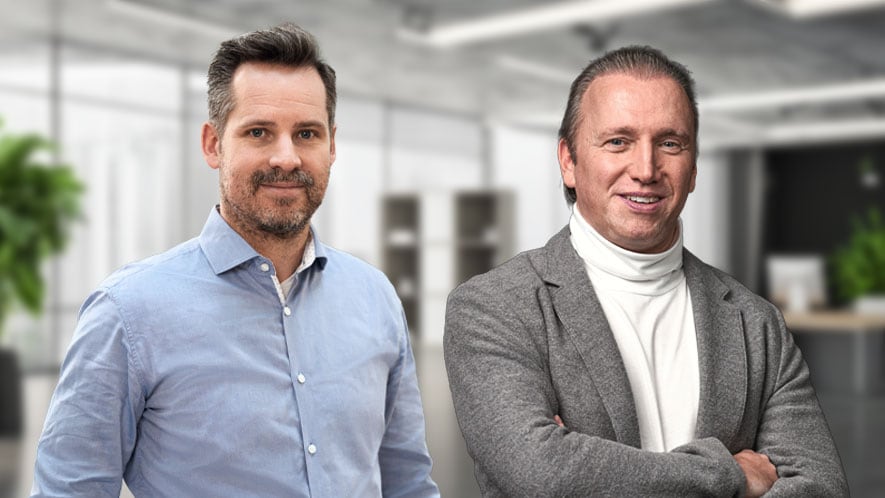
Your experts to answer your questions

Gunther Dütsch
Partner, Sustainability Services, PwC Germany
Tel: +49 160 3739019
Email

Thomas Hampel
Partner, Transformation, PwC Germany
Tel: +49 170 5628709
Email

Technology as a success factor in your sustainable transformation

In today’s business environment, the importance of sustainability cannot be overstated; no company can afford to overlook it. This is partly driven by pressure from investors, consumers and business partners. Another major catalyst is regulation: requirements such as the European Corporate Sustainability Reporting Directive (CSRD), the EU Taxonomy, the Carbon Border Adjustment Mechanism (CBAM), the German Supply Chain Due Diligence Act (Lieferkettensorgfaltspflichtengesetz, or LkSG) and the EU Deforestation Regulation (EUDR) make sustainability reporting mandatory for many companies.

However, this is not only about meeting short-term legal requirements. It is also about seizing the opportunity to equip the organisation with a future-proof sustainability IT architecture that enables value generation through ESG and sustainability data

“Organisations can no longer depend on manual methods, informal procedures, or spreadsheets, as these approaches hinder compliance with harmonized regulatory standards and reduce auditability. To address this, companies must enhance their technical infrastructure and processes while integrating modern IT solutions. This strategic approach is essential for effectively managing, controlling, and evaluating ESG and sustainability performance over the long term.”

Gunther Dütsch,Partner, Sustainability Services, PwC Germany

By leveraging modern sustainability technologies, companies can meet ESG requirements and other regulatory challenges efficiently and in a future‑proof manner. Our experts support you with the necessary expertise in regulation, sustainability and IT to guide your company in establishing a suitable IT architecture for your sustainable transformation.

Our services in the field of sustainability data and technology

With efficient data acquisition and reporting, we help you to comply with sustainability standards.

We develop solutions for sustainability planning and integrate ESG data into financial planning and management.

We develop solutions for carbon calculations (Scope 1 to 3, PCF), carbon accounting and net zero initiatives.

Together we design sustainable supply chains and integrate sustainability requirements into your IT landscape.

We develop and implement EHS solutions to minimise risks and achieve your sustainability goals.

We find the ideal IT solutions for your sustainability management, customised to your needs.

Through automated data collection processes, we optimise your ESG data strategies and analyses in a sustainable manner.

We use AI to optimise sustainability strategies and automate data analyses for informed decisions.

We ensure the integrity of your sustainability technologies and advise you on the implementation of appropriate controls.

We accompany the implementation of your sustainability solutions from concept to go-live.

We support you in the digitalisation and integration of regulatory requirements

< Back

< Back
[+] Read More

Increasing regulatory requirements

Utilize sustainability technologies to effectively manage ESG and sustainability data, reduce complexity, and capitalize on potential synergies

Recent years have been marked by growing regulatory requirements that place a strong focus on reporting, such as the EU Taxonomy, CSRD and CBAM regulations. These requirements emphasise the necessity of comprehensive, transparent sustainability reporting that considers both quantitative and qualitative data points.

On top of this, regulations are also emerging whose scope extends beyond pure reporting and increasingly focuses on operational aspects of the supply chain. The German LkSG and the European CSDDD prioritise obligations related to environmental protection and human rights. Meanwhile, the EUDR and the Packaging and Packaging Waste Regulation (PPWR) require businesses to tackle issues like recycling capacities, reusability and ensure that products and packaging are deforestation-free.

Technical tools are essential for successfully meeting these diverse requirements. Sustainability technologies make it possible to effectively acquire and process ESG data for different use cases and regulations. They support the tracing of products and materials, and ensure that acquired data can be used to meet regulatory requirements. Smart data management and integrated systems play a crucial role in providing and using data efficiently for reporting and operational applications. This in turn enables businesses not only to ensure compliance, but also to gain strategic business benefits from the new operational requirements.

The key challenges in implementing your ESG and sustainability initiatives

Although sustainability reporting is increasingly standardised, many businesses find it difficult to collect, process and report on relevant data. Why? Because unlike in financial reporting, businesses generally have little experience in this field, and lack developed system landscapes, processes and data structures to fall back on. Data acquisition is frequently still manual, which is both inefficient and prone to errors.

Companies that fail to meet statutory requirements risk financial consequences, such as fines and legal disputes. In the case of the EUDR, organisations may be subject to fines exceeding 4% of their annual turnover. Additionally, there is the threat of temporary exclusion from public tenders and a temporary ban on the market authorisation, trade or export of the relevant raw materials or products. Businesses also run the risk of considerable reputational and image damage and a loss of customer and investor confidence.

Businesses face challenges in collecting and processing sustainability data. The emergence of numerous tools tailored to specific use cases frequently leads to a complex mix of solutions, hindering the seamless integration of ESG and sustainability data into existing IT systems and resulting in inefficient parallel structures. A sense of proportion and foresight are needed to create a sustainability IT architecture that is versatile and future-proof.

Given this context, it is not a surprise that the market for sustainability technologies promises enormous growth. According to a report by Fortune Business Insights, this segment is expected to grow to €57 million by 2030, corresponding to an average annual growth rate of around 21% by 2030.

Do you have any questions?

Get in touch with our experts and meet our Sustainability Data & Technology team.

Five reasons to deploy sustainability technologies

1. Data management and analysis: Centralised data management simplifies the collection and analysis of large quantities of data, and promotes the optimisation of sustainability strategies and reporting through the use of AI.

2. Automation and digitalisation: Sustainability technologies and data management enable the optimisation and automation of processes like reporting and promote digitalisation and sustainable business models.

3. Integration and transparency: The integration of sustainability into the existing system landscape improves ESG and financial planning, enables transparency in operational processes and supports sustainable corporate decision-making.

4. Risk management and compliance: Sustainability technologies support businesses in adhering to legal and ethical standards. Automated controls and early warning systems flag risks in the supply chain at an early stage.

5. Environmental protection and efficiency enhancement: The deployment of automation and sustainability technologies contributes considerably to reducing resource consumption and minimising the ecological footprint. 

Four challenges, four solutions: an extract from our portfolio

Automated sustainability data management

Challenge: Companies must deal with ESG (Environmental, Social, Governance) regulations in order to achieve their sustainability goals and remain competitive. They therefore collect sustainability data, but face the challenge of providing and utilising this data in a complete, timely manner and in the required quality. Exacerbating this problem is a shortage of specialist staff as ESG data collection and processing ties up human resources that are then lacking elsewhere. Without digitalisation and automation, this task is difficult to accomplish.

What we offer: We work with you to identify your use cases and develop suitable data management solutions. These solutions guarantee high data quality, enable efficient processing and analysis, and provide valuable insights for strategic decision-making.

How it works in practice: Based on your requirements, we define the necessary data management processes and identify the most suitable technologies. For this, we employ our best-practice experience, and do not confine ourselves to any particular technology. For example, our data management concepts might be built on SAP Datasphere, Databricks and MS Fabric, or may be smoothly integrated and expanded into your existing technology landscape.

Added value for you: Automated and integrated solutions for sustainability data management improve the quality, availability and precision of sustainability data, and thus its informative value and applicability. This enables you not only to meet regulatory requirements, but also to drive forward strategic sustainability initiatives in a purposeful manner.

Sustainability tool selection

Challenge: The market for sustainability and ESG tools is young and in constant evolution. Businesses often struggle to identify suitable software solutions that meet their requirements and can be fitted into the existing IT landscape as smoothly as possible. This becomes particularly difficult when multiple sustainability topics, such as CSRD, EUDR and carbon management, need to be implemented. There is often a lack of knowledge about what offerings are available on the market. Decision-making is further hampered by cost-cutting measures and a lack of digital transformation.

What we offer: We offer solutions that meet your requirements in the long term. We use our extensive experience to analyse your requirements and develop a tailored IT concept. This can be either a single application solution or a more comprehensive concept. Our focus is on creating synergies and achieving seamless integration.

How it works in practice: Based on your requirements and your existing IT landscape, we consult our comprehensive PwC database, which contains a criteria-based evaluation of all current ESG and sustainability tool solutions. This enables us to quickly select suitable technologies based on your requirements and develop a target architecture concept. Our structured approach ensures that the selected solution not only meets your needs perfectly, but can also be seamlessly integrated into your existing infrastructure.

Added value for you: With our support, you benefit from an architecture solution that not only fulfils your current requirements, but is also future-proof while making efficient use of your budget. We achieve this thanks to our comprehensive knowledge of current and future regulatory requirements and our extensive project experience in all fields of sustainability.

Technical implementation and transitioning into regular operation

Challenge: The implementation of processes and systems poses considerable challenges for many companies. Half-hearted measures or over-hasty and unstructured adoption often lead to errors that impair both data quality and the credibility of sustainability reporting. Inefficient implementation can result in businesses failing to attain their sustainability goals and to meet stakeholder expectations and regulatory requirements.

What we offer: We support you beyond the concept and design phase of your IT architecture, including technical implementation and transition to operational use. We take care of functional system definition, technical implementation, go-live and hypercare, which includes user support. This ensures you receive thorough support from a single provider, guaranteeing reliable implementation outcomes.

How it works in practice: We then move into the implementation and testing phase. We translate the results of the concept phase into a functional system design that fully reflects your specific requirements. To ensure seamless adoption of the IT system, we offer close support and assistance during the go-live and after production start. Optionally, we also offer an upfront proof of concept statement to confirm that the concept also meets your expectations in practice, ahead of full implementation. This is especially useful for validating complex processes at an early stage and securing the necessary resources.

Added value for you: You benefit from our extensive implementation experience and technical expertise. We collaborate with you throughout this project phase to turn your concept into reality, ensuring your business and employees are ready through early engagement, training, and user support. This enables you to focus on your core business while being perfectly prepared for future requirements.

Value beyond compliance

Challenge: With EU regulations like the CSRD, the CSDDD and the EUDR setting new standards, businesses find themselves at a critical point on their sustainability-journey. While these regulatory changes do raise the bar for reporting obligations, true leadership in sustainability also requires the pursuit of strategic and operational goals that align with the company's priorities.

What we offer: With our comprehensive expertise in sustainability reporting, performance management and corporate planning, we support you not only in meeting your obligations in regulatory reporting, but also in establishing an active sustainability performance management system and integrating it into financial reporting, controlling and corporate planning.

How it works in practice: Together with our clients, we identify exciting use cases in which the data collected to meet compliance obligations (e.g. relating to CSRD and EUDR) can also be used for other strategic purposes. We initiate projects focusing, for instance, on operational control, purchase optimisation, supply chain and integration into financial planning. In this way, we achieve value-adding use cases while optimising processes and supply chains and facilitating enhanced financial and operational planning.

Added value for you: With PwC by your side, you not only meet reporting requirements, but also make informed strategic and operational decisions that drive meaningful transformation. For example, you will be able to identify rising emissions and gender pay gaps and take effective measures. You can improve the sustainability of your products and reduce consumption of raw materials, which will not only cut your costs, but also sharpen your competitive edge. Together, we will build a future in which your data collection is not just an obligation, but a valuable resource.

Video

Data & Tech für Nachhaltigkeit

Im Fokus unseres exklusiven Events in Frankfurt stand die Frage, wie Daten, innovative Technologien, Künstliche Intelligenz und Automatisierung dazu beitragen können, Nachhaltigkeitsstrategien wirksam umzusetzen. Mehr als 100 Teilnehmende diskutierten praxisnah über Herausforderungen im Reporting, den gezielten Einsatz von Technologie zur Steigerung der Wertschöpfung und Wege, ESG ganzheitlich in Strategie und operative Prozesse zu integrieren. Inspirierende Praxisbeispiele und konkrete Learnings haben deutlich gemacht: Die Transformation ist möglich – datengetrieben, resilient und innovativ.

2:48
More tools
  • Closed captions
  • Transcript
  • Full screen
  • Share
  • Closed captions

Playback of this video is not currently available

Transcript

ESG in Focus

At the “ESG in Focus” event at our Experience Centre in Frankfurt we got together with our technology partners SAP and around 50 clients to shed light on ESG topics and their implementation from a technological perspective. Inspiring discussions, practical client presentations and dynamic breakout sessions provided valuable insights for the business world. Watch our video and experience the highlights and fascinating insights!

“To ensure that sustainability initiatives are not merely perceived as regulatory obligations, smart data usage and the identification of value-adding use cases are required. Integrated and automated data management is particularly important in this regard.”

Thomas Hampel,Partner, Transformation, PwC Germany
Follow us

Contact us

Gunther Dütsch

Gunther Dütsch

Partner, Sustainability Services & Climate Change, PwC Germany

Tel: +49 160 3739019

Thomas Hampel

Thomas Hampel

Partner, Transformation, PwC Germany

Tel: +49 170 5628709

Benjamin  Lösken

Benjamin Lösken

Director, Sustainability Services, PwC Germany

Tel: +49 160 5364533

Julia Paasche

Julia Paasche

Senior Manager, Transformation, PwC Germany

Tel: +49 151 15531328

Daniel  Merdan

Daniel Merdan

Senior Manager, Transformation, PwC Germany

Tel: +49 175 2569483

Katharina Trump

Katharina Trump

Senior Manager, Sustainability Services, PwC Germany

Tel: +49 151 56895925

Judith Sturm

Judith Sturm

Senior Manager, Sustainability Services, PwC Germany

Tel: +49 160 4336800

Hide